
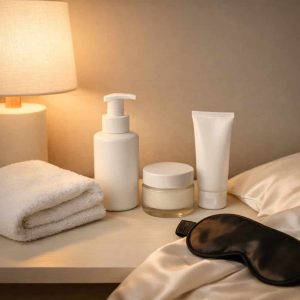
 If your skin tends to break out, evenings can feel especially pressure-filled especially with acne prone skin. You’re tired, your face feels congested, and there’s a quiet worry that whatever you do next could make things worse. Even if you’re using in-office treatments like a dual yellow laser to help manage inflammation and redness, what you do at home at night still plays a significant role in how your skin behaves day to day.
The truth is, acne-prone skin doesn’t just respond to products or procedures. It responds to patterns. Stress, rushing, over-cleansing, and harsh routines all show up on the skin by morning. A low-stress evening reset works alongside treatments like dual yellow laser by helping the skin stay calm, supported, and less reactive between sessions.
A low-stress evening reset isn’t about doing more. It’s about doing less, on purpose, and creating a short window where your skin can shift out of defense mode. When the nervous system settles, oil production steadies, inflammation eases, and the skin barrier gets a chance to repair. That’s the real goal at night.
Here’s how to build an evening reset that feels calm, realistic, and supportive for acne-prone skin.
Step one: Create a clear “day is done” signal
Skin thrives on predictability. One of the most underrated acne triggers is constant cortisol spikes, especially late in the day. Before you even touch your face, give your body a signal that the workday is over.
This can be simple. Change out of tight clothes. Wash your hands with warm water. Dim the lights in one room. These small actions tell your nervous system that it’s safe to downshift. When stress hormones drop, inflammatory signals in the skin tend to follow. You don’t need a complete self-care ritual. You need consistency.
Step two: Cleanse gently, once, and stop there
Over-cleansing is familiar with acne-prone skin, especially at night. It comes from the urge to “undo” the day. But repeatedly stripping the skin disrupts the barrier.
Use a gentle cleanser that removes sunscreen, makeup, and surface oil without leaving your skin tight. Lukewarm water matters here. Hot water can increase redness and irritation, while cold water doesn’t clean as effectively. Cleanse once. Massage lightly. Rinse thoroughly. Then stop. If your skin feels clean but calm, you’ve done enough.
Step three: Dry your face without friction
This sounds minor, but it adds up. Rubbing your face with a towel creates micro-irritation, especially if you’re already dealing with inflamed breakouts.
Step four: Apply products in a slow, intentional way
Nighttime skincare shouldn’t feel like a race. Acne-prone skin responds better when products are applied with minimal friction and a steady pace.
If you use a treatment, apply a thin, even layer. More product doesn’t mean better results. Follow with a lightweight moisturizer that supports the skin barrier.
Step five: Set a hard stop on skin checking
One of the most significant stressors for acne-prone people is mirror checking. Leaning in and analyzing texture and mentally predicting tomorrow’s breakout.
Decide ahead of time that once your skincare is done, you’re done looking. Turn off bright bathroom lights. Leave the room. This boundary protects your mental state, which matters more for skin health than most people realize. Chronic worry increases inflammation. Reducing that loop is part of treating acne.
Step six: Choose a low-stimulation evening activity
What you do after skincare matters. Scrolling, intense shows, or late-night work can keep your body in an alert state, even when you feel physically tired.
Aim for one low-stimulation activity after your reset. Reading something light, stretching gently, and listening to music or a podcast that doesn’t trigger strong emotions. This helps your body transition toward sleep, when skin repair actually happens.
Better sleep quality supports hormone balance, immune function, and skin recovery. You don’t need perfect sleep. You need fewer obstacles.
Step seven: Keep the routine short enough to repeat
The best evening reset is the one you’ll do even on hard days. If your routine feels like a project, it will eventually fall apart, and inconsistency can trigger more breakouts.
A low-stress reset should take 10 to 15 minutes total. That includes cleansing, skincare, and the first part of the winding-down process. When it’s simple, it becomes automatic. When it’s automatic, your skin gets steady signals of safety and care.
Why this approach works for acne-prone skin
Acne is not just a surface issue. It’s influenced by inflammation, hormones, and the skin’s ability to heal overnight. High stress in the evening keeps the body in a fight-or-flight state, which interferes with all three.
By creating a calm, predictable reset, you’re reducing one of the biggest invisible triggers. You’re supporting your skin barrier instead of attacking it. And you’re giving your body the conditions it needs to repair itself while you sleep.
This isn’t about perfection or control. It’s about reducing friction, mentally and physically. When evenings feel calmer, skin often follows.
Over time, that calm adds up. Fewer reactive breakouts. Less redness in the morning. And a healthier relationship with your skin, which might be the most critical result of all.